

As global attention to environmental protection and food safety continues to rise, the food packaging industry is accelerating its shift towards sustainability. Among the key drivers of this transformation, food-grade plastic wrap machines have emerged as a pivotal force, leading the industry to break free from the constraints of traditional high-pollution, high-energy-consumption production models. This shift not only responds to the global call for carbon neutrality but also meets consumers' increasingly stringent requirements for food contact materials. Notably, the upgrading of related equipment such as Plastic Cling film machine, Stretch cling film machine and Stretch Cling Film Making Machine is closely aligned with this sustainable trend, jointly building a green ecosystem for the food packaging industry.
In the past, the food packaging sector has long been plagued by issues such as excessive energy consumption and environmental pollution from packaging materials. Traditional plastic wrap production equipment often uses non-degradable raw materials and outdated processes, resulting in large amounts of plastic waste and failing to meet the food safety standards of many countries. Food-grade plastic wrap machines have addressed these pain points through technological innovation. They adopt degradable food-grade raw materials, such as plant-based polymers, and integrate energy-saving technologies in the extrusion, stretching and winding processes. Compared with traditional equipment, their energy consumption is reduced by 25%-35%, and the produced plastic wrap can be naturally degraded in soil or water, effectively reducing environmental pressure.
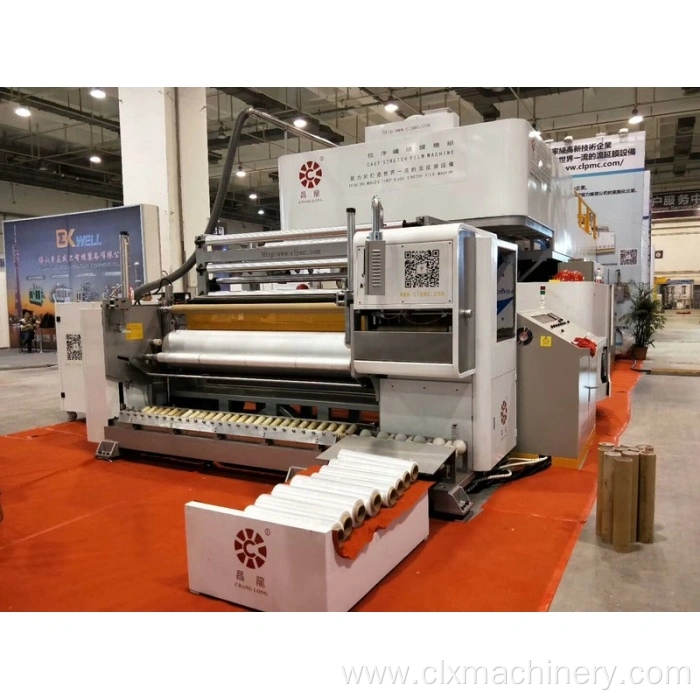
The sustainable upgrade of food-grade plastic wrap machines has also driven the green transformation of the entire industrial chain, includingPlastic Cling film machine manufacturing. Previously, many Plastic Cling film machine producers focused solely on improving production capacity, neglecting environmental performance. Now, inspired by the sustainable concept of food-grade plastic wrap machines, manufacturers are actively integrating environmental protection technologies into equipment design. For example, they add raw material purification systems to ensure the safety of plastic cling film and install energy recovery devices to improve energy utilization efficiency. This transformation enables Plastic Cling film machine products to meet both food safety and environmental protection requirements, enhancing their competitiveness in the global market.
In the food packaging field, stretch cling film is widely used due to its excellent wrapping and fresh-keeping properties, which drives the demand for high-performance Stretch cling film machine. Food-grade plastic wrap machines have set a benchmark for sustainability in this segment. By absorbing the eco-friendly technology of food-grade plastic wrap machines, Stretch Cling Film Making Machine manufacturers have optimized the film stretching process, using environmentally friendly additives to improve the degradability of stretch cling film. At the same time, the intelligent control system of food-grade plastic wrap machines has been applied to Stretch Cling Film Making Machine, realizing precise control of film thickness, width and tension. This not only reduces raw material waste by more than 15% but also ensures the stability of product quality, further promoting the sustainable development of the stretch cling film production segment.
Market demand is another key driver for the leading role of food-grade plastic wrap machines in sustainable development. With the improvement of consumers' environmental awareness and food safety awareness, more and more food processing enterprises are inclined to choose eco-friendly and food-grade packaging solutions. A report from the Global Packaging Institute shows that the global market size of sustainable food packaging machinery will grow at a CAGR of 7.8% from 2024 to 2029, and food-grade plastic wrap machines, as a core product, will account for an increasing share. This market trend has also boosted the development of green Plastic Cling film machine and Stretch cling film machine, forming a virtuous cycle where market demand drives technological upgrading and technological upgrading promotes market expansion.
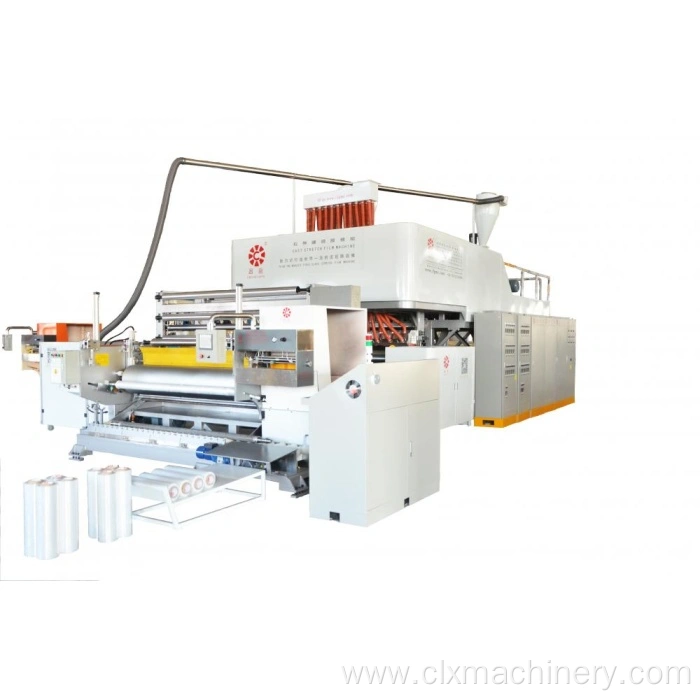
Policy support from various countries has further strengthened the leading position of food-grade plastic wrap machines in sustainable development. Many regions have introduced policies to restrict the use of non-degradable plastic products and encourage the development of eco-friendly packaging machinery. For instance, the European Union's "Circular Economy Action Plan" requires that all food packaging materials be recyclable or degradable by 2030, while China has included green packaging machinery in the list of key supported industries. These policies provide subsidies and tax incentives for enterprises engaged in the R&D and production of food-grade plastic wrap machines and Stretch Cling Film Making Machine, creating a favorable policy environment for industrial upgrading.
Looking ahead, food-grade plastic wrap machines will continue to lead the sustainable development of the food packaging industry with continuous technological innovation. Future equipment will achieve higher energy efficiency, smarter control and wider applicability, while the integration of Plastic Cling film machine, Stretch cling film machine and food-grade plastic wrap machine technologies will be further deepened. This integration will help the entire food packaging industry achieve a comprehensive transformation from "high-carbon" to "low-carbon", contributing to the global sustainable development goals. In the era of green development, food-grade plastic wrap machines are not only a product upgrade but also a practice of industrial social responsibility, paving the way for a healthier and more environmentally friendly food packaging future.